Yaku monkeys are smaller than the native macaques of mainland Japan. They are dark grey and have long thick hair. Before getting carried away about the cute and fluffy creatures however – the most important points to remember about the Yaku macaques are that:
1. They are wild.
2. They have very large pointy teeth.
There are around 7000 of them roaming the mountains and can often be seen along the side of the mountain roads and on the trails. Sometimes hanging around the villages watching traffic.
DEER
Yaku shika are also smaller than the mainland deer and number around 7000. They can be seen on the mountain trails in the day and in the villages at night. Yes, that is one of my snowballs on its head.
The Mamushi: A poisonous viper that lurks near water.
Just to give you an idea of this delightful creature – my boss was bitten on the thumb and half his body was temporarily paralysed. Also a local resident in his 50s died from a bite. Spot it in the photo below.
But don’t let that put you off the mountain trails – as soon as they spot you they slither away into the bushes.
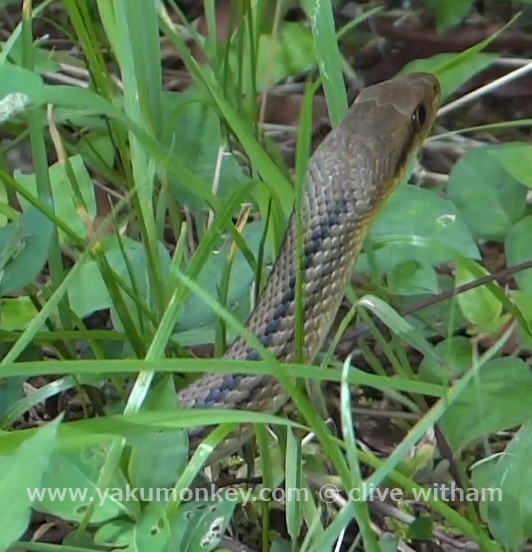
Not all snakes are the Mamushi though. Here’s a Japanese Rat snake in Anbo.
MUKADE
Once found lurking in the trouser leg of my son’s pyjamas, these are vicious little things and cause quite a swollen rash on the skin.
HORNETS
Large kick-ass stinging machines which target you and don’t stop until you’re stung.
BEETLES
Any size, shape and colour you could wish for.
Shake a tabu tree in the summer and watch giant horned beetles fall.
SPIDERS
A variety of strange looking spiders inhabit the forest.
TOADS
surprisingly common on the mountain slopes.
LEECHES:
A loyal bloodsucking friend to many hikers. They climb up your boot and find a nice piece of juicy leg above your sock line. They cause no harm to normal healthy people and can be left alone until they drop off filled with your blood. Should you need to remove them however, use salt.
Clive WithamComments Off on YAKUSHIMA A YAKUMONKEY GUIDE (2nd EDITION)
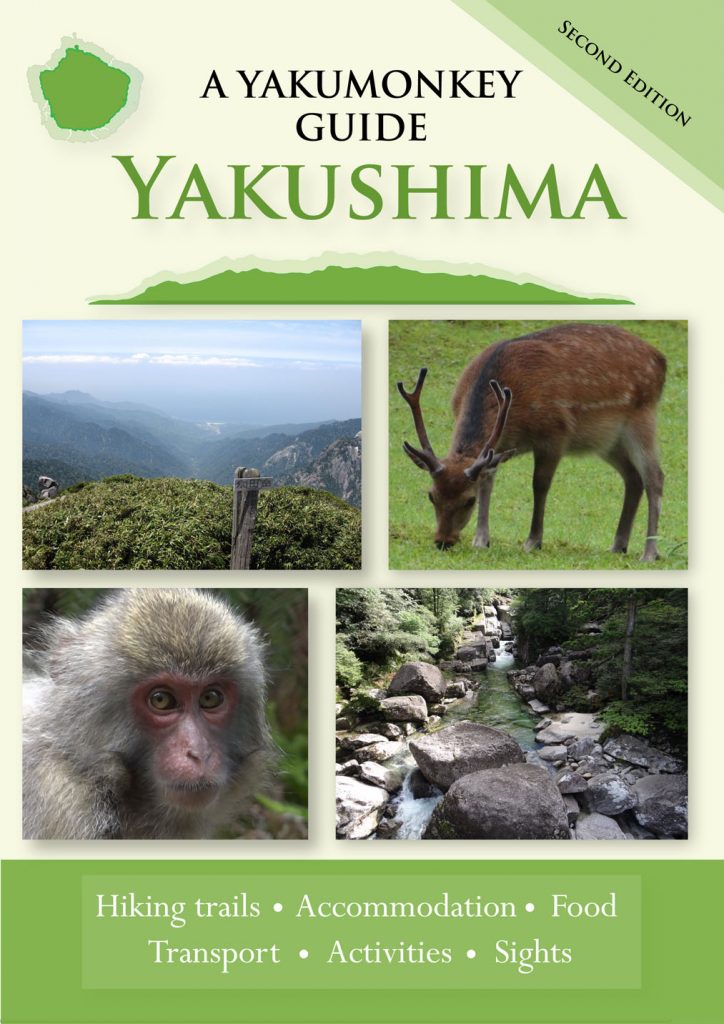
YAKUSHIMA 2016 NOW IN BOTH PAPERBACK & EBOOK EDITIONS! No Japanese? No problem. Everything you need to enjoy your visit to Yakushima in 2016 is right here! Be free, be independent and find your own adventure! The experience that I gained from living on Yakushima as a fisherman and craftsman
Yakumonkey Newsletter Archive: NEWSLETTER MAY 2009 NEWSLETTER JUNE 2009 NEWSLETTER JULY 2009 NEWSLETTER AUGUST 2009 NEWSLETTER SEPTEMBER/OCTOBER 2009 Return to Homepage
Clive WithamComments Off on Yakushima attractions: The North West
The north west of Yakushima is where the UNESCO protected forest reaches all the way to the sea. SEIBU RINDOH FOREST PATH Location: West coast of Yakushima Dense vegetation on Seibu Rindoh Forest Path A wild macaque crossing Seibu Rindoh Forest Path Drive, ride or cycle on the meandering road
If you can’t find what you’re looking for on this site, check the following: 1. The comments section at the bottom of each page. 2. THE YAKUMONKEY FORUM 3. If you wish to email – you’ll find us at admin@yakumonkey.com. 4. For more information about Yakushima check out the one
Clive WithamComments Off on VILLAGE MAPS of YAKUSHIMA
Here are English maps of the main villages on Yakushima: NAGATA and ISSO Map of Nagata MIYANOURA Map of Miyanoura (English) ANBO Anbo Map (English) ONOAIDA Map of Onoaida (English) KOSEDA Map of Koseda (English) HIRAUCHI and YUDOMARI Map of Hirauchi (English) KURIO and NAKAMA Map of Kurio (English)
The recent JAL expansion program means that they are going to fly to and from Yakushima directly from Fukuoka starting summer 2011. So Yakushima will soon be directly accessible from Kagoshima, Osaka and now Fukuoka. Return to home
Is that hornet the notorious Japanese giant hornet (Vespa mandarinia japonica)? Speaking as a waspophobe who's going to be visiting Yakushima in May/June, how worried should I be?
Yes, it's the Vespa mandarinia japonica otherwise known as the Suzumebachi hornet. They don't normally cause any problems for visitors but here's some of the advice from my book if you're at all worried – keep to the paths, don't wear black and avoid strong perfumes.
Very common! But more so in rainy season. Usually the only reason you know you had a leech is when you later take your socks off and there's blood on them. The leech is normally long gone.
Yes, mosquitoes are there outside of winter! Around the rivers there can also be midges. And yes, if you're going into the mountains it's a good thing to have some repellent on.
What is the reason behind not wearing black? I've read other places not to wear bright clothing bc insects will mistake you for a flower, but haven't heard about the not wearing black thing before.




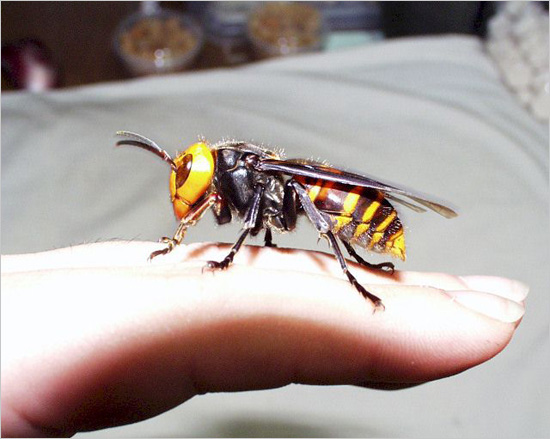


Is that hornet the notorious Japanese giant hornet (Vespa mandarinia japonica)? Speaking as a waspophobe who's going to be visiting Yakushima in May/June, how worried should I be?
Yes, it's the Vespa mandarinia japonica otherwise known as the Suzumebachi hornet. They don't normally cause any problems for visitors but here's some of the advice from my book if you're at all worried – keep to the paths, don't wear black and avoid strong perfumes.
…just how common is it to find a leech sucking away at your shin?
Very common! But more so in rainy season. Usually the only reason you know you had a leech is when you later take your socks off and there's blood on them. The leech is normally long gone.
Outside of what's listed already, are there any year-round or seasonal biters (like mosquitoes)? Would you recommend insect repellent?
Yes, mosquitoes are there outside of winter! Around the rivers there can also be midges. And yes, if you're going into the mountains it's a good thing to have some repellent on.
What is the reason behind not wearing black? I've read other places not to wear bright clothing bc insects will mistake you for a flower, but haven't heard about the not wearing black thing before.